Family conversations
How to interview a parent without making it feel like an interview
Begin with a detail your parent can picture, ask one question at a time, and follow the answer instead of a checklist. Agree before recording, and let a short conversation be enough.
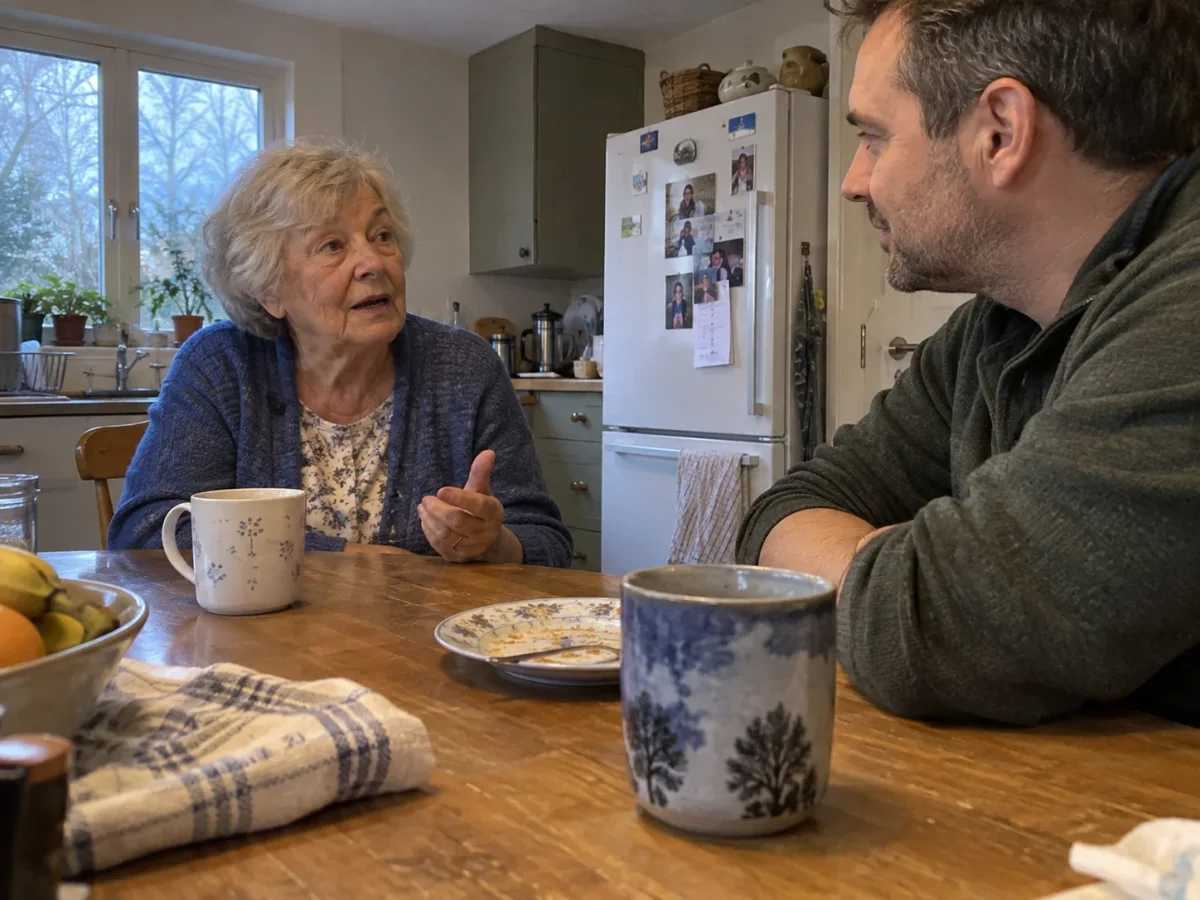
Imagine bringing out a photograph of the old kitchen. You ask about the house. Your parent answers by pointing to a chipped bowl on the counter. That bowl may be the conversation: who used it, what they made, and why it was always in the same place. You can ask about the house another day.
Choose a doorway, not a whole lifetime
“Tell me your life story” can feel like a request for an important, orderly performance. A specific invitation asks less: “Who sat beside you at this table?” or “What happened after everyone came home?” You are offering a place to begin, not testing how much they remember.
Choose one photograph, object, place, or familiar routine. Ask whether they feel like talking about it. If they would rather begin somewhere else, use their starting point. A prepared question is useful only if it helps the person speak.
A simple rhythm: ask, wait, follow
Ask one question, then leave space. Avoid filling every pause or supplying the answer you expect. If a detail appears - someone’s nickname, the route to work, the smell of lunch - ask about that detail before moving on.
Try “What do you remember noticing?” rather than “You must have been happy.” Ask “Who else was there?” when you need context. If you already know a version of the story, hear this telling before comparing the two. The point is to understand their account, including what feels different now.
End gently, and keep the recording well
Agree beforehand whether you are recording and who may hear it. At the end, ask whether anything should remain private or whether they want to add something. Note the date, who was speaking, and any uncertainty about names or years.
Afterwards, save the recording beside the photograph and a few words that will help you find it again. A title such as “Sunday lunch at the small table” may be more useful than “Interview 1.” Keep the original recording; a neat summary cannot carry every pause or turn of phrase.
“What did an ordinary Sunday look like in your house?”